Markets - Highly Liquid Futures, Options, OTC and Cash Markets
Weather Products
Manage risk associated with fluctuating global temperatures.

Block trades

Why trade Weather products? [gray3, text-3]
Access to unique tools for managing exposure to weather
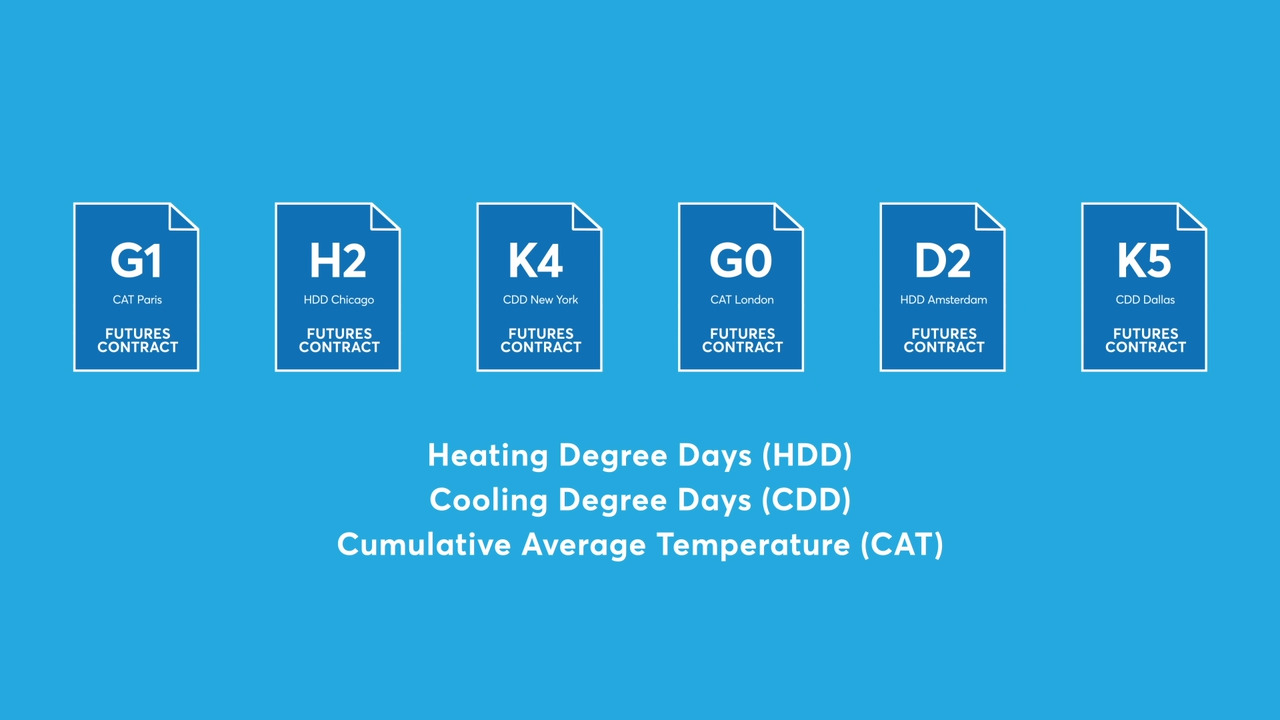
Transfer risk associated with adverse weather events with index-based products geared to average seasonal and monthly weather in 18 cities globally.
Stabilized cash flow for hedges participating in these markets
From utility companies to pension funds, the Weather complex has a wide array of market participants.
Price transparency across multiple platforms
Trade any Weather contract on CME Direct or Trayport, providing real-time price data across CME Globex and CME ClearPort.
Tools for your trading strategy
Build and refine your trading strategies with free pricing and analytics tools for CME Group Weather products.
Resources
Resources

Weather Brokers
| Company | Contact Name | Region | Phone |
| BGC Financial LP | Nicholas Ernst | US | +1(201) 308-2089 |
| Snapper Creek Energy | Alejandro Turullols | US | +1 (917) 509-0155 |
| TP ICAP | Tim Boyce | US & Europe | +447779 851 306 |
Get Added to the List
To be listed or to edit your listing, email: brokerservices@cmegroup.com
Weather insights
/content/cmegroup/en/articles
/content/cmegroup/en/education
/content/cmegroup/en/newsletters
/content/cmegroup/en/news
/content/cmegroup/en/education/articles-and-reports
/content/openmarkets/en
/apps/cmegroup/templates/articleContentTemplate
/conf/cmegroupaem/settings/wcm/templates/cme-group-case-study-article-template
/apps/cmegroupaem/templates
/conf/cmegroupaem/settings/wcm/templates/cme-group-video-article-template
/conf/cmegroupaem/settings/wcm/templates/cme-group-standard-article-template
/conf/cmegroupaem/settings/wcm/templates/cme-group-showcase-article-template
/conf/cmegroupaem/settings/wcm/templates/cme-group-podcast-article-template
/conf/cmegroupaem/settings/wcm/templates/cme-group-newsletter-article-template
/conf/cmegroupaem/settings/wcm/templates/cme-group-media-mentions-article-template
/conf/cmegroupaem/settings/wcm/templates/cme-group-faqs-article-template
/conf/cmegroupaem/settings/wcm/templates/cme-group-press-release-template
/apps/cmegroupaem/templates/article
/apps/cmegroupaem/templates/contentpage
/conf/openmarkets/settings/wcm/templates/openmarkets-category-template--editable-
/conf/openmarkets/settings/wcm/templates/openmarkets-showcase-article
/conf/openmarkets/settings/wcm/templates/openmarkets-standard-article
Master the Weather market
Take self-guided courses on Weather products
Contact a Weather expert
Connect with a member of our expert Weather team to get more information about our products, find a broker or to contact a market maker.